A clear plan for your cat's first 90 days

Daily checklists, health tracking, and AI coaching — based on the 3-3-3 adjustment rule.

Purrmanent
Daily checklists, health tracking, and an AI coach — everything you need for your cat's first 90 days home.
What's inside

90-Day Roadmap
Daily checklists that follow the 3-3-3 adjustment rule. Tasks adapt to your cat's personality.
AI Coach
Ask questions about your cat's behavior. Gets answers from a curated knowledge base. Not a replacement for a vet.
Health Log
Track vaccinations, weight, and vet visits. Set reminders so nothing gets missed.
Crisis Guidance
Step-by-step protocols when something seems wrong — not eating, hiding, or acting out.
Progress & Badges
Earn points for completing tasks. Graduate your cat on Day 90.
How it works
Add your cat
Name, age, personality. A shelter code is optional.
Tell us about your cat
Shy, active, or balanced. This sets your starting phase.
Get your plan
Daily tasks appear based on your cat's phase. You can add your own too.
Track daily
Check off tasks, log health, ask the AI coach when you need help.
Graduate on Day 90
Earn a certificate when your cat completes the program.
AI Coach
Ask questions. Get answers from a cat care knowledge base.
Ask anything
Ask about behavior, feeding, health, or transitions.
Health log
Log vaccinations, weight, and vet visits.

Checklists
Manage your daily and phase checklists.
When something's wrong
Get step-by-step guidance when your cat needs help.
Note: AI Coach is designed to help guide your cat's adaptation, but does not replace professional veterinary diagnosis or advice.
The 3-3-3 Rule
Most cats follow this pattern. Your plan adjusts based on your cat's personality.

Sample Checklist: Decompression (DAYS 1 - 3)
Select a quiet, low-traffic bedroom as your cat's basecamp.
Provide at least two cardboard boxes or hiding spots.
Keep food, fresh water, and litter boxes separated from each other.
Avoid direct eye contact or picking up the cat; let them decompress.
Before you bring your cat home
A few things to prepare.
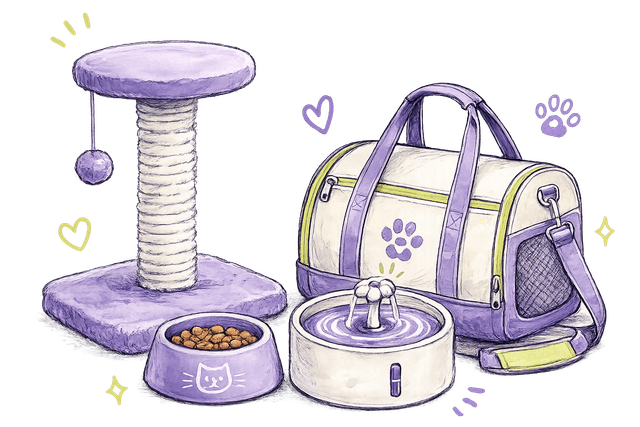
Space & Security Prep
- Dedicated quiet "basecamp" room (separate from family traffic)
- Secure mesh screens installed on all open windows & balconies
- Removal of toxic houseplants (e.g. lilies, aloe vera, ivy)
- Hiding spots created (cardboard boxes, cat tunnels)
Adopter Knowledge Prep
- Understanding "slow blinking" for trust building
- Recognizing stress indicators (flattened ears, tail flicking)
- Commitment to keep cat indoors only to ensure safety
- Awareness of normal appetite shifts during transition
Material & Technical Setup
- 1+1 litter box setup (one box per cat, plus one extra)
- Separate stations for food and fresh water (instinctive preference)
- Vertical scratching posts (sisal rope or sturdy cardboard)
- High-quality grain-friendly food matching shelter diet
Personality tracks
Your cat's personality determines their starting plan.
The Shy/Fearful Cat Path
Designed for shelter cats that hide, freeze, or avoid human presence. Focuses heavily on basecamp restriction, scent swaps, and gradual confidence building.
Mandatory Phases:
Stage 1: Basecamp Isolation (Days 1-7)
Keep inside one small quiet bedroom. Do not force interaction. Let them decompress.
Stage 2: Passive Presence (Days 8-14)
Sit in the room reading or working. Feed wet food nearby to build positive associations.
Stage 3: Scent Exchanging (Weeks 3-4)
Rub a clean towel on the cat and place it in the living room, and vice versa.
Stage 4: Controlled Access (Months 2-3)
Crack the door open with baby gates. Let them explore room-by-room slowly.